Take a look at the two images below. The first image is the Mona Lisa, the famous work by Leonardo da Vinci—a masterpiece that has held a special place in the history of art for centuries. The second image is an AI-generated recreation of the same work.
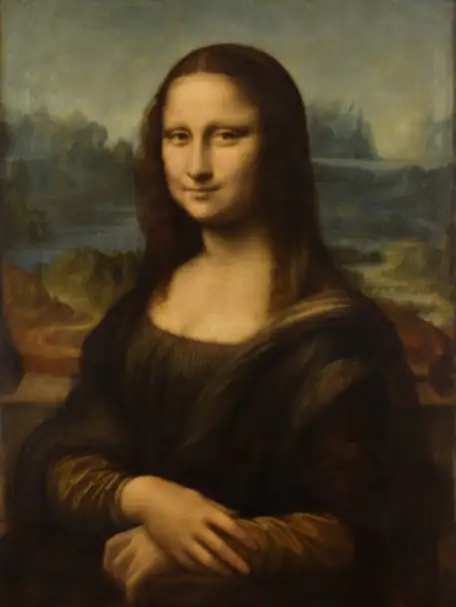
Figure 1: Mona Lisa, by Leonardo da Vinci; Louvre Museum, France.
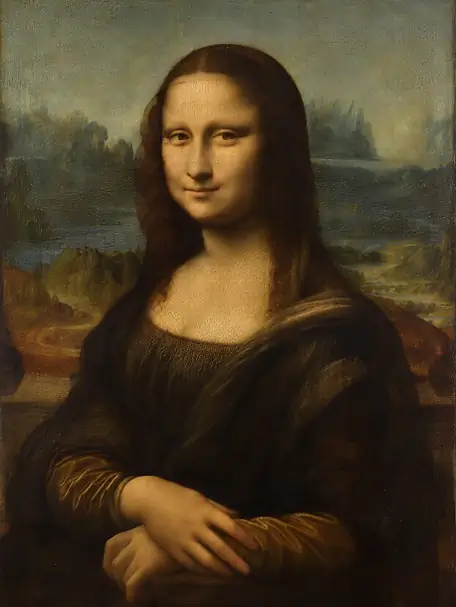
Figure 2: An AI-generated recreation of the Mona Lisa using ChatGPT.
Which one do you find more beautiful? And which one do you think has greater artistic value?
For many of us, the answer may seem obvious. The first image is valuable not only because of its visual qualities, but also because of da Vinci’s name, the history of its creation, and its place in our cultural memory. The second image, by contrast, may simply appear to be an example of what a new technology is capable of producing. But does this difference in our evaluation arise solely from the characteristics of the images themselves, or does the information we have about their creators also influence our judgment?
This question is one of the important topics in experimental aesthetics and the cognitive psychology of art, fields that aim to explain, through empirical methods, how perception, cognition, experience, and contextual information contribute to the evaluation of artworks.
Liking, Beauty, and Artistic Value Are Three Different Variables
In experimental aesthetics, the evaluation of art is usually not measured with a single question. Researchers may ask participants how much they like an image, how beautiful they find it, how profound or meaningful they consider it to be, or how much monetary value they assign to it. These measures are related to one another, but they are not interchangeable.
For example, an image may be visually appealing in terms of composition and color, while the viewer considers it lacking in personal meaning. Conversely, a work with less visual appeal may still be regarded as valuable because of its narrative, historical context, or conceptual idea. Therefore, if a study asks participants only which image they find more beautiful, its findings cannot be directly generalized to the artistic value or cultural status of the works.
A 2023 study by Bellaiche and colleagues examined this distinction experimentally. In the study, participants were shown a set of AI-generated images, but the creator label attached to each image was randomly assigned as either “human” or “AI.” This allowed the researchers to separate the effect of information about the creator from the visual properties of the images themselves.
As shown in Figure 3, images labeled as human received higher scores on all four measures. However, the magnitude of the difference was not the same across the different criteria. Based on Cohen’s d, a standardized measure of effect size, the difference was 0.17 for liking and 0.22 for beauty, whereas it increased to 0.47 for profundity and 0.61 for perceived monetary value. According to commonly used guidelines for interpreting this measure, the differences in the first two criteria were small, while the effect for profundity approached the medium range, and the difference in perceived monetary value was substantial. This pattern suggests that information about the creator can influence not only people’s liking and perception of visual beauty, but also their sense of an artwork’s meaning and economic value.
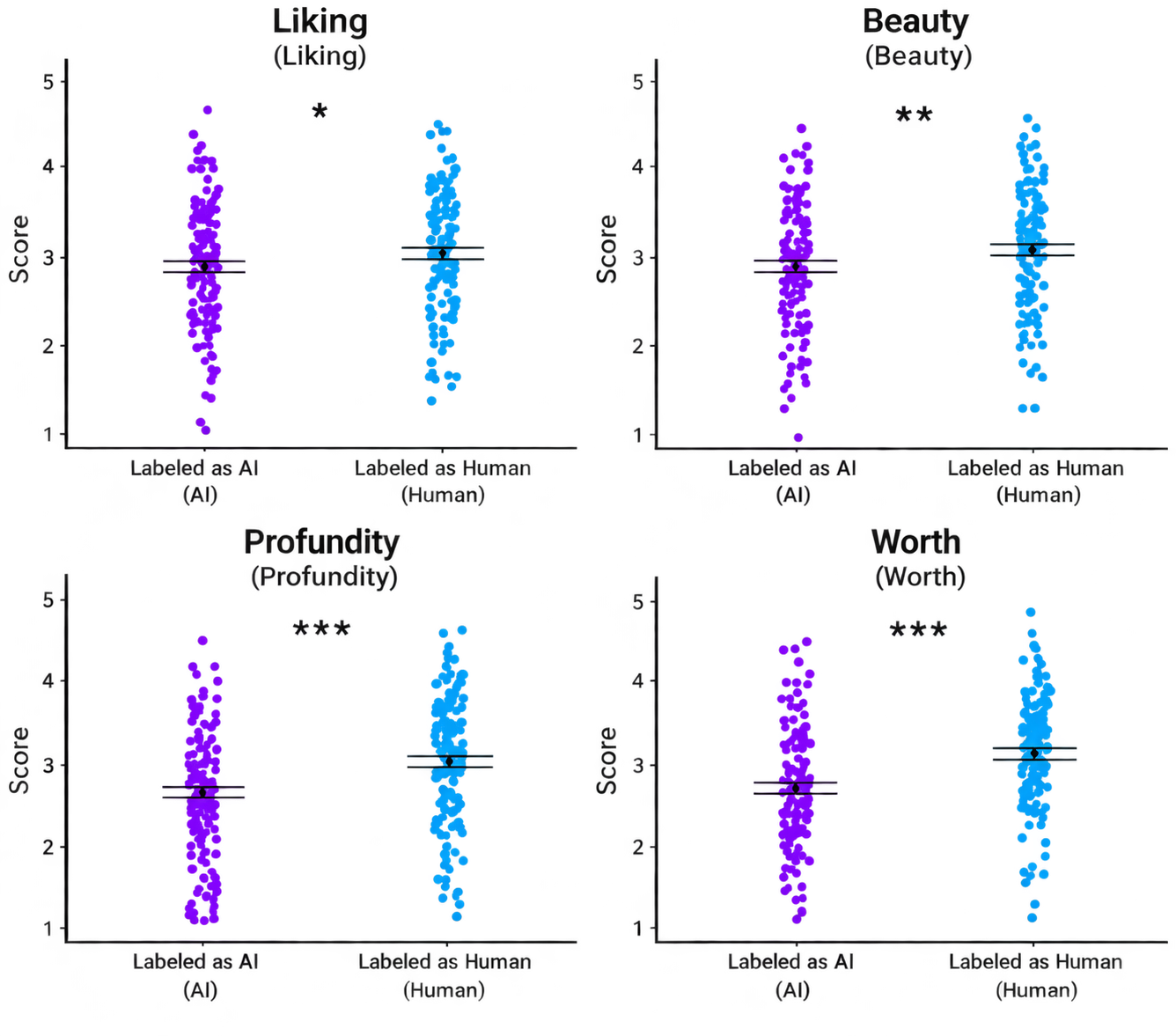
Figure 3: Comparison of four criteria—beauty, liking, monetary value, and profundity or meaningfulness—between images labeled as human-made and images labeled as AI-generated.
When We Do Not Know the Origin of the Work, Which One Do We Choose?
To examine visual preference without the influence of information about the creator, a different experimental design can be used. Two works with relatively similar characteristics are shown to the viewer, but neither the name nor the origin of either image is revealed.
In a study published in 2024, Quek and Varlet examined 50 human-made artworks and 50 images generated with the DALL·E 2 model. The images were matched as closely as possible in terms of style, color, and composition. In the first part of the study, 127 participants were asked to choose, from the image pairs shown in Figure 4, the work they preferred. In another part involving 137 participants, the researchers examined whether people could identify the origin of the images.
The results showed that, in direct comparisons, participants who were not told the origin of the works significantly preferred the AI-generated images. In another part of the study, participants were asked to identify which images had been generated by AI. Their accuracy was significantly higher than 50 percent, which would be the level expected from random guessing.
These findings show that preferring an artwork does not necessarily mean being unable to identify its origin. In direct comparisons, participants selected AI-generated works more often, while at the same time they were able, with above-chance accuracy, to distinguish some AI-generated works from human-made ones. Therefore, the ability to identify the origin of a work and the aesthetic preference for that work are two separate issues.
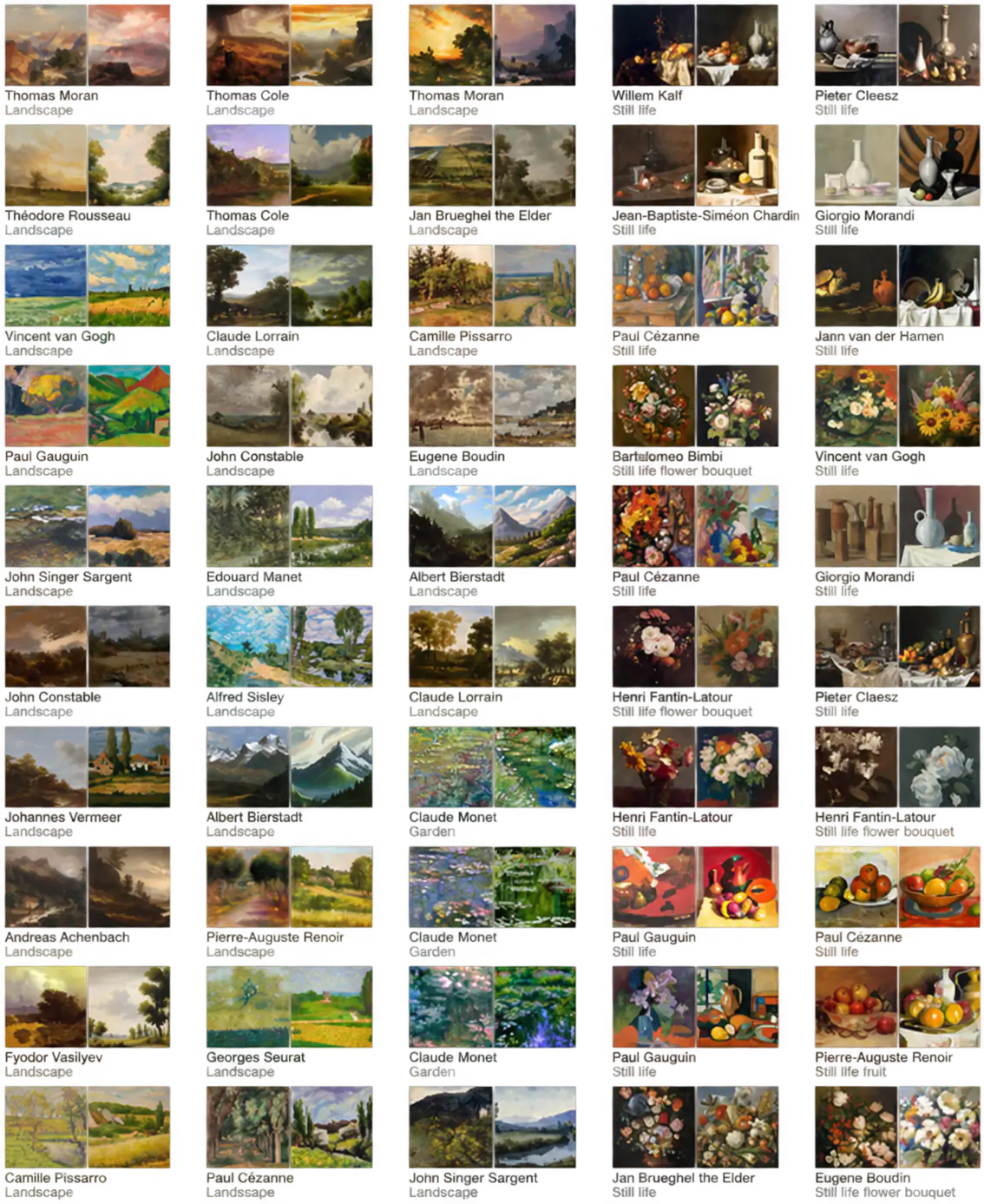
Figure 4: Image pairs consisting of 50 human-made artworks and 50 images generated with DALL·E 2, used in a 2024 study to examine visual preference without the influence of information about the creator.
Is Contextual Information Always a Disadvantage for AI Art?
Information about the origin of an artwork is not limited to the identity of its creator. Awareness of how a model was trained, the sources of its data, the degree of human involvement in the production process, or the conditions under which the work is marketed and sold may also influence the viewer’s judgment. Here, it is important to distinguish between aesthetic evaluation and ethical evaluation: a person may find an image beautiful while still objecting to the way it was produced or monetized.
A 2025 study by Bara, Ramsey, and Cross, published in Cognition, examined this issue across three preregistered experiments. The results showed that factual information about the processes behind AI systems can, under certain conditions, reduce both the ethical acceptability and the aesthetic appeal of AI-generated works—for example, in contexts involving monetization or the granting of artistic status to such works. However, providing additional information about the success of AI art did not produce a clear change in ethical judgments. These findings remind us that people’s responses to AI art do not necessarily reflect a fixed aesthetic preference. Judgments can change depending on information about the production process, the question being asked of the viewer, and the criterion chosen for evaluation.
So, Which Do People Actually Prefer?
At present, empirical research does not support a single answer that applies to every situation. In some studies, when the origin of the images is not disclosed and participants are asked to choose between works, AI-generated images are selected more often. In others, when the same image is presented with either a human or an AI label, the human label leads to higher ratings. In addition, differences in evaluation may be larger for criteria such as profundity and monetary value than for criteria such as beauty or liking.
Therefore, broad statements such as “people prefer human art” or “people prefer AI art” are overly general unless the research method, evaluation criterion, type of images, and information provided to participants are clearly specified. A more precise question is: under what conditions, according to which criteria, and with what information, do viewers prefer human-made or AI-generated works?
A Small Reveal!
Both of the images you saw at the beginning of this article were generated by AI. The first image was also merely a recreation that evoked the Mona Lisa, not da Vinci’s original work.
Now, does that change your answer about which image is more beautiful?