Can a Work of Art Be Complete Without the Participation of Its Audience?
Can a work of art be complete without the participation of its audience? This question challenged the traditional relationship between the artwork and the viewer in the twentieth century. In the conventional model of visual art, the artwork was regarded as an independent object presented before an audience, who observed and interpreted it without necessarily taking part in its creation. With the emergence of kinetic art, performance art, and participatory art, however, this relationship gradually began to change, and the audience's role expanded from that of a mere spectator to that of a potential participant in the artistic experience.
During the 1950s and 1960s, artists such as Nicolas Schöffer created works that responded to changes in their surroundings through the use of movement, light, and cybernetic systems. At the same time, movements such as Fluxus challenged the boundaries between the artwork, everyday actions, and audience participation. The expansion of electronic and digital technologies in subsequent decades further increased the possibilities for audience interaction with artworks, contributing to the development of Interactive Art. Within this approach, an artwork is no longer necessarily a fixed object independent of its audience; rather, it can change in response to the viewer's movements, touch, voice, or choices. Nevertheless, merely responding to an audience's presence is different from a form of participation in which the audience plays a role in shaping meaning. In the latter case, the relationship between the audience and the artwork itself becomes part of the artistic subject.
One of the fundamental developments in quantum physics was the reconsideration of concepts such as observation, measurement, and the states of physical systems. Meanwhile, modern art, particularly interactive art, also challenged the established relationship between the audience and the artwork. However, this conceptual resemblance does not imply that observation has the same meaning in science and art. In quantum physics, measurement is a physical process based on an interaction with a system, whereas in interactive art, the audience's observation and participation can become integral to the experience and the formation of the artwork's meaning. This distinction raises an important question: How can the concepts of quantum physics be translated into the language of artistic experience and creation without distorting their scientific meaning?
Today, this connection has taken more tangible forms in certain artistic projects. Some artists use quantum computing and related technologies to create or transform artworks. Others draw on the theoretical structures, concepts, and philosophical implications of quantum physics as the basis for their research and artistic practice. These diverse approaches can be explored within the field of Quantum Art. This term does not refer to a single artistic style or a specific artistic method; rather, it encompasses a range of experiments at the intersection of art, science, and technology. In examining these works, it is essential to distinguish between the actual use of quantum technology, inspiration drawn from quantum theory, and the metaphorical application of its concepts. The relationship between art and physics becomes clear not merely through visual similarities or poetic interpretations, but through a careful examination of the mechanisms and contexts underlying each work.
I'll Be Your Qubit (2018), by Martha W. Lewis, is an example of an interactive installation within the field of Quantum Art. The project was developed during Lewis's artist residency at the Yale Quantum Institute, in collaboration with quantum physics researchers. Through this work, the artist seeks to translate certain abstract concepts from quantum information theory into a spatial, visual, and participatory experience. In this approach, the audience is not merely a recipient of information or a spectator of a scientific display; rather, their presence and actions play a role in how different elements of the work are revealed and experienced. In this way, the relationship between the audience, the artistic system, and the concept of observation becomes one of the installation's central themes.
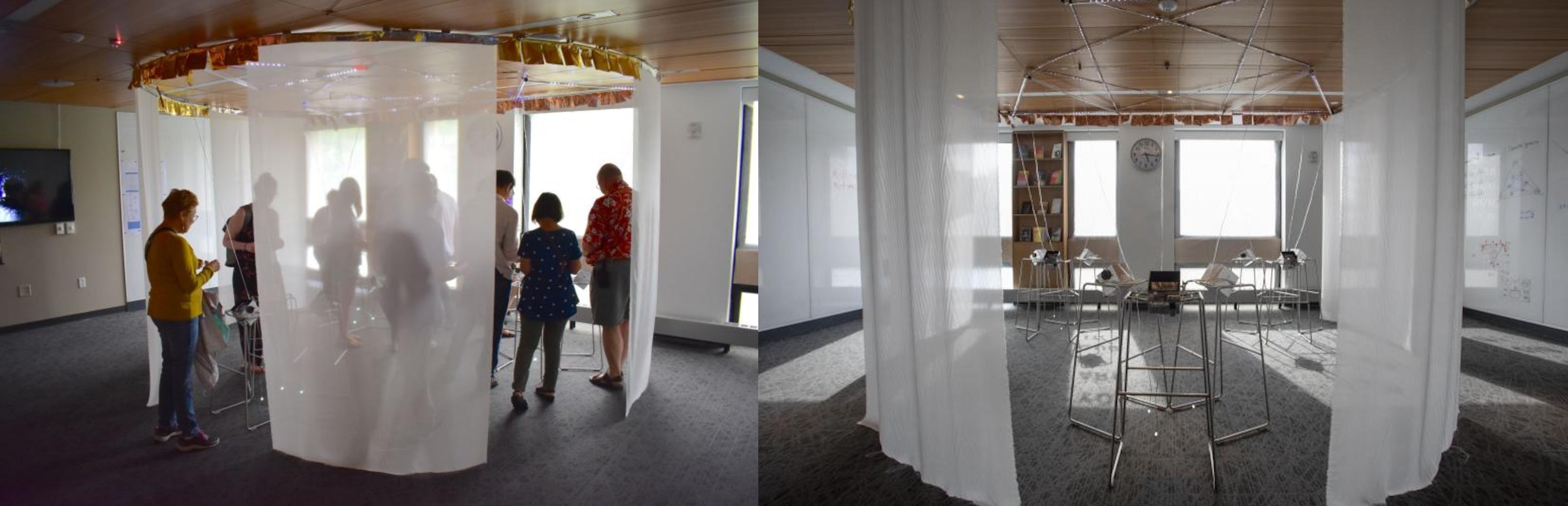
Figure 1: The installation space and the artistic reconstruction of a laboratory enclosure for qubits.
The installation space was transformed into an environment inspired by dilution refrigerators, devices used in laboratories to achieve extremely low temperatures and study certain quantum systems, including superconducting qubits. Visitors entered this reconstructed space and, rather than observing the equipment from the outside, found themselves inside an environment that evoked the laboratory setting in which qubits are studied. This choice can be interpreted as more than a visual reconstruction of a scientific instrument, since it changes the audience's position in relation to the structure inspired by the device and turns the boundary between observing from the outside and being present within the artwork into a subject for experience and reflection.
One of the interactive elements of the work is an old optical toy known as a thaumatrope. It consists of a disc with two different images on opposite sides. When spun rapidly, the two images merge in the viewer's perception. The artist uses this characteristic to evoke the concept of quantum superposition. In quantum mechanics, the state of a system can be described as a linear combination of several possible states. However, the perceptual merging of two images in a thaumatrope is a phenomenon arising from the mechanisms of human vision and is not equivalent to quantum superposition. Therefore, the thaumatrope should be understood as a visual metaphor that brings an abstract concept closer to a familiar and perceptible experience. The artistic significance of this choice lies in the fact that, rather than simply encountering a theoretical definition, the audience participates in creating the visual experience through their own actions.
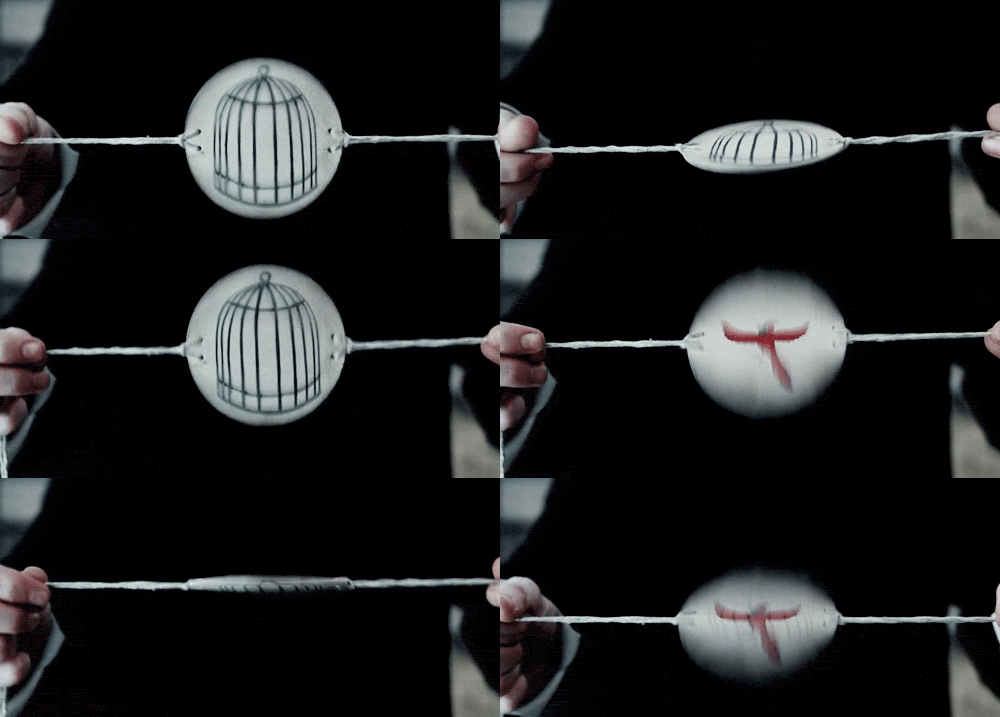
Figure 2: The thaumatrope, an optical toy that merges two images in the viewer's perception, serving as a visual metaphor for approaching the concept of quantum superposition.
Another component of the installation is a collection of flipbooks whose behavior changes in response to the audience's presence. According to the mechanism described for the work, these flipbooks exhibited random behavior before the motion sensors were activated. As a visitor approached, the sensors detected their presence, and the way the images were displayed changed accordingly. This mechanism can be interpreted as an artistic metaphor for the role of observation and measurement in quantum physics. However, it is important to distinguish between the detection of an audience member's presence by a sensor and the measurement of a quantum system. In quantum mechanics, measurement involves a physical interaction with the system and does not necessarily depend on the presence or awareness of a human observer. The artistic significance of this element lies in the fact that visitors can observe the effect of their own presence on the behavior of the artwork, transforming them from passive spectators into active participants who influence the artistic experience.
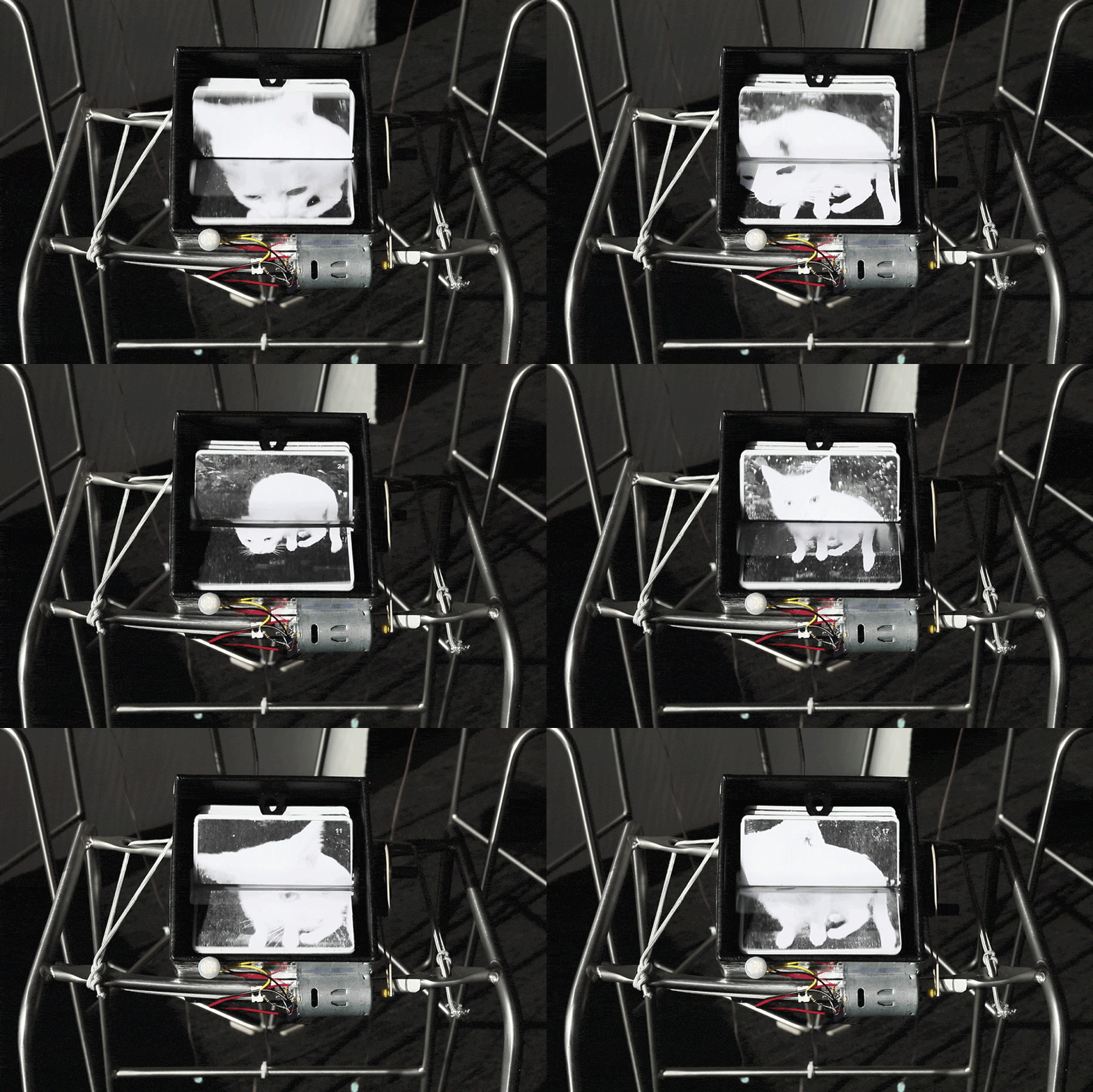
Figure 3: Flipbooks whose images change when motion sensors are activated, turning the audience's presence into part of the artwork's underlying mechanism.
Overall, the installation I'll Be Your Qubit translates concepts from quantum physics into the language of art through sensory and interactive experiences rather than by reproducing the actual phenomena themselves. The thaumatrope offers a metaphor for superposition through the perceptual merging of images, while the flipbooks, by responding to the visitor's presence, transform the question of observation and changes in state into a participatory experience. These mechanisms are not intended to simulate quantum mechanics; rather, they provide an opportunity for the audience to reflect on observation, interaction, and their own relationship with what they see. The significance of the work lies precisely in this shift in the audience's role: visitors are no longer merely spectators of objects and images; their actions influence the formation of part of the artistic experience, and the relationship between the individual and the artwork itself becomes a subject for artistic reflection. Although the physical structure of the installation remains in place even in the absence of visitors, some of its potential is realized only through interaction. From this perspective, we can return to the question posed at the beginning: Can a work of art be complete without the participation of its audience? There is no universal answer that applies to all works of art, but in this particular installation, participation is an integral part of its creative logic. The audience does not literally become a qubit, nor is their presence equivalent to quantum measurement. Rather, the title of the work metaphorically describes a moment in which the observer becomes part of the experience.