Act I: Do We Discover Reality, or Do We Construct It?
Imagine a tree standing in a remote forest, one that no human has ever seen, no camera has ever photographed, and no conscious being has ever known to exist. Does the tree still exist? Is its existence independent of all observation and perception, or must the mind and consciousness enter the picture before we can meaningfully speak of its existence? This seemingly simple question leads us to one of the most fundamental debates in philosophy: the relationship between reality and the mind. Do we come to know a world that exists independently of us, or does the mind play an essential role in shaping what we call reality?
If your answer is that the tree exists regardless of whether anyone observes it, then your position is close to what philosophers call Realism. Realism maintains that reality and the external world exist independently of the human mind and its perceptions. From this perspective, the universe existed long before human beings appeared, and its existence does not depend on whether it is experienced or observed by us. However, accepting the independent existence of the external world does not necessarily mean that we have direct or complete access to it. A realist can acknowledge that reality exists independently of the mind while also recognizing that our knowledge of it is limited, fallible, and shaped by the capabilities of our perceptual faculties and the instruments we use. We must therefore distinguish between two separate claims: that the world exists independently of us, and that we can know it exactly as it is.
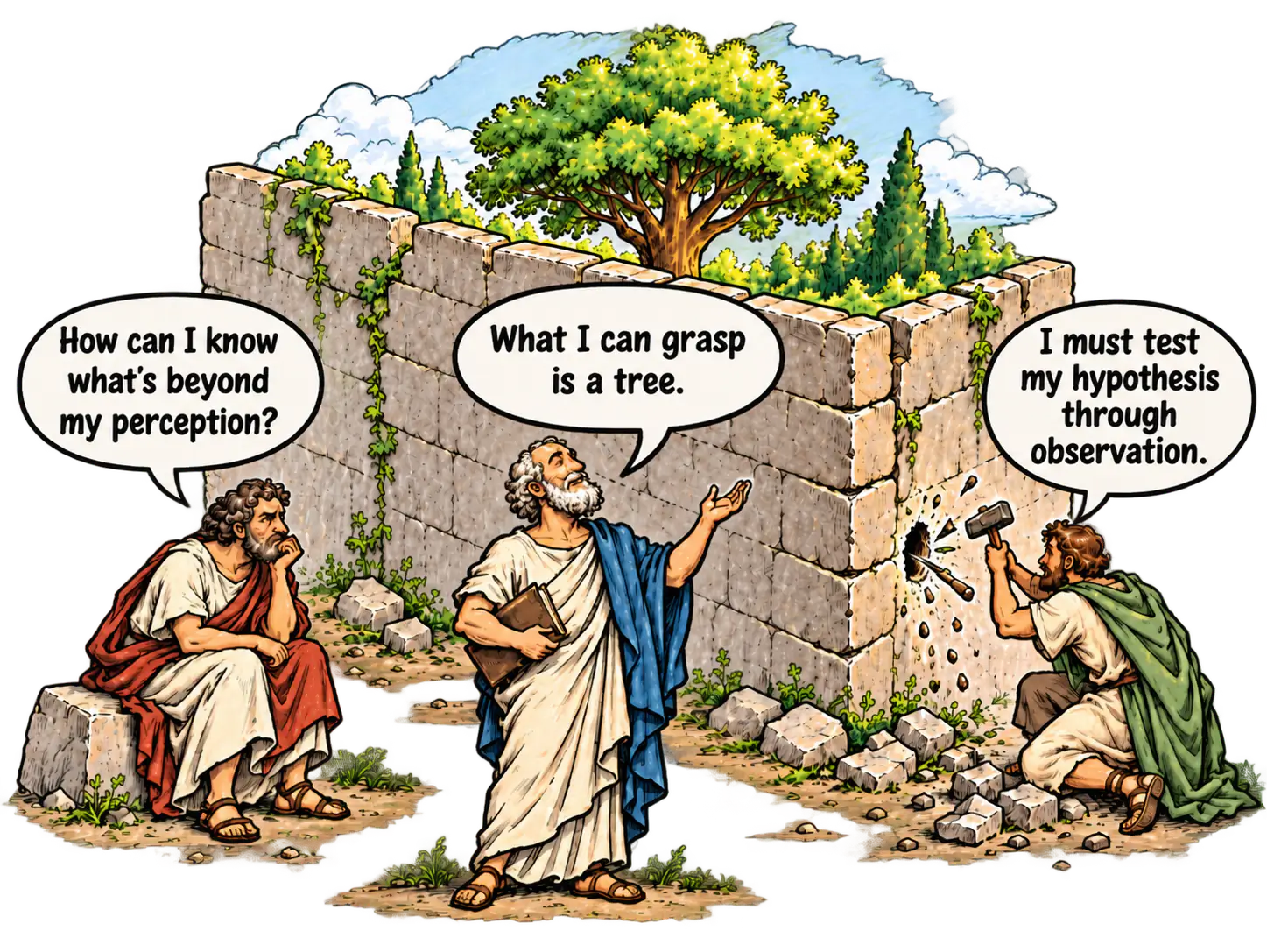
Figure 1: Is the world what it is in itself, or what we understand it to be?
On the other side of this debate lies Idealism, a philosophical position that, in its various forms, assigns a fundamental role to the mind or consciousness in understanding and explaining reality. One prominent version of this approach can be found in the philosophy of George Berkeley, the Irish philosopher. Through his famous principle, esse est percipi (to be is to be perceived), Berkeley argued that the existence of sensible objects depends on their being perceived. According to his view, what we call a tree consists of a collection of ideas and sensory experiences perceived by a mind, rather than an object existing independently of all perception. This does not mean, however, that a tree exists only when a human being happens to observe it. To account for the continued existence of objects when no human mind perceives them, Berkeley invoked the constant perception of God. Thus, his disagreement with realism is not simply about whether the external world exists, but about the nature of the existence of sensible objects and their relationship to perception.
To examine this issue more closely, we can place three philosophical approaches side by side. Each offers a different answer to the relationship between the mind, reality, and knowledge. First, Realism emphasizes the independent existence of reality and regards scientific knowledge as an attempt to discover it. In contrast, Idealism assigns a fundamental role to the mind or consciousness in understanding and explaining reality, arguing that what we know cannot be considered independently of the conditions through which we perceive and understand it. Alongside these two approaches is Pragmatism, which shifts the focus away from questions concerning the ultimate nature or existence of reality and instead emphasizes the practical consequences of ideas and theories in experience and everyday life.
Despite their fundamental differences, these three philosophical positions can be brought face to face with a common question: Does science discover reality as it actually is, or does it merely provide us with a framework for understanding, interpreting, and predicting the world?
To clarify the differences between these positions, let us first consider the central claim of each:
Philosophical Position | Central Claim |
|---|---|
Realism | Reality exists independently of the human mind and consciousness. |
Idealism | The mind or consciousness plays a fundamental role in the constitution or understanding of reality. |
Pragmatism | The meaning and validity of ideas should be assessed in terms of their consequences in experience and practice. |
Act II: A Debate Among Three Philosophers and a Quantum Problem
Once upon a time, Psiket School hosted three philosophers, each approaching the world and the relationship between reality and knowledge from a different perspective. One identified as a realist, another defended idealism, and the third belonged to the pragmatist tradition. The subject of their meeting was one of the most controversial issues in modern physics: Does quantum measurement merely reveal a pre-existing reality, or does the measurement process play a role in determining what we observe as reality?
To open the discussion, the moderator introduced a problem from quantum mechanics. In this theory, particles such as electrons can be described, prior to measurement, by a state known as quantum superposition. In other words, with respect to a chosen measurement basis, the theory describes the system as a coherent combination of multiple possible states rather than assigning it a single definite value for the observable in question. Yet when a measurement is performed, the measuring apparatus registers one of the possible outcomes associated with that measurement.
This raises a fundamental question. Turning to the three guests, the moderator asked:
When we observe the results of quantum experiments, do those results correspond to a reality that already existed independently of the measurement process, or does the act of measurement play a role in determining the reality we experience?
The Realist:
Measurement cannot create reality out of nothing. There must be something that exists for us to interact with in the first place. The fact that we do not know the electron's state before measurement does not mean that the electron itself lacks an independent reality.
The Idealist:
You have assumed from the outset that a reality independent of knowledge exists, and then proceeded to treat that assumption as your conclusion. Is that not a form of begging the question? How do you know that the reality you describe exists independently of the conceptual and perceptual frameworks through which you understand it?
The Pragmatist:
Both of you are making claims that may never be conclusively established. But what difference do these claims make to our understanding? If two theories produce exactly the same empirical predictions, why should we prefer one over the other on purely metaphysical grounds?
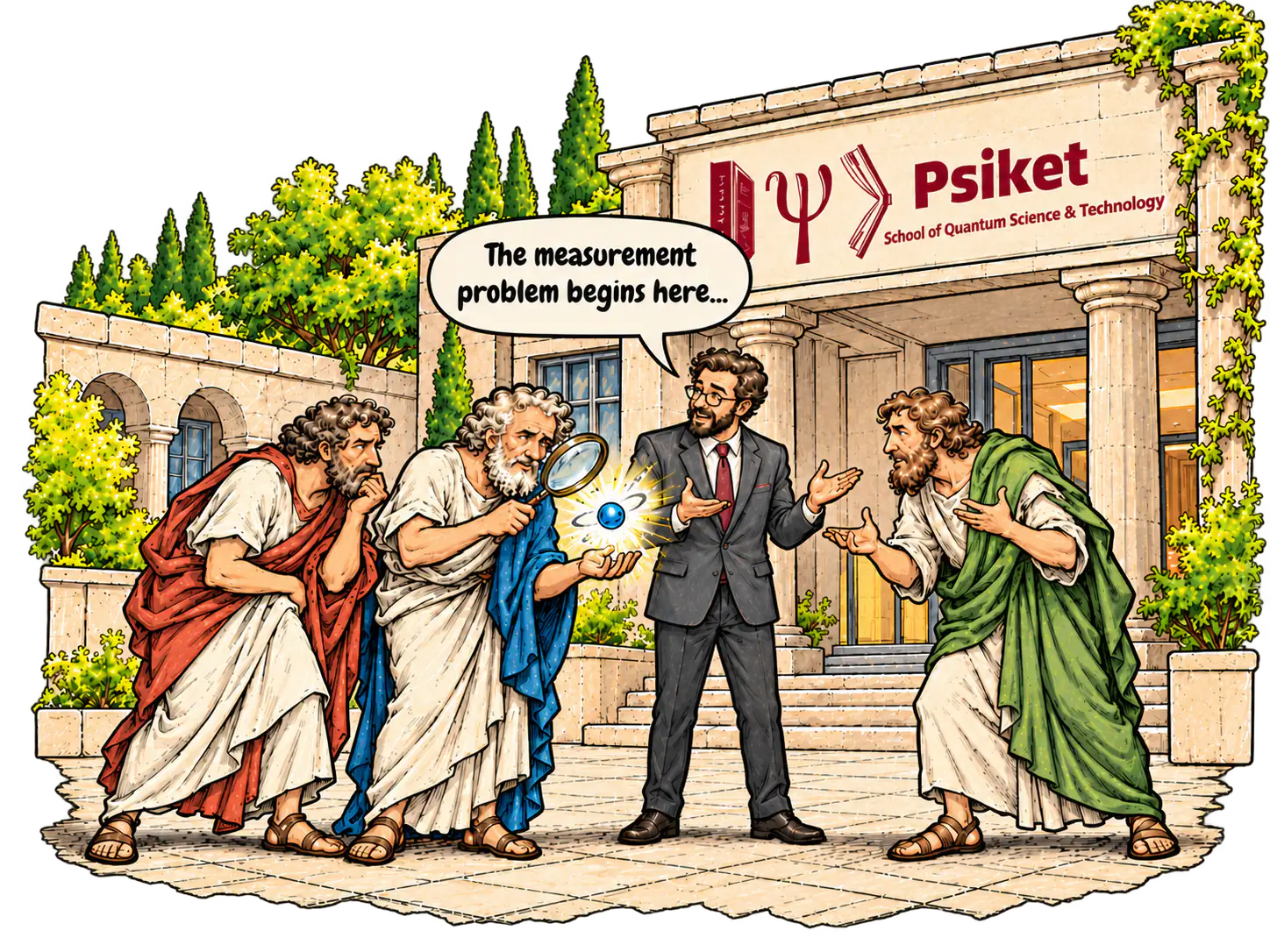
Figure 2: Can quantum mechanics settle one of philosophy’s oldest debates, or has it only made it more complicated?
The Realist:
Because empirical success does not necessarily amount to truth. Throughout the history of science, there have been theories that made successful predictions but were eventually abandoned. Can we really conclude that a theory provides an accurate picture of reality simply because it works?
The Pragmatist:
I have never equated practical success with absolute truth. That is an oversimplification of pragmatism. My question is this: what grounds do you have for claiming that an independent reality exists beyond the evidence and empirical consequences available to us?
The Idealist:
The more fundamental problem is that both of you treat knowledge as though it were a mirror reflecting the world. Yet every experience of the world is mediated by the structures of our cognition. How can we move from knowledge that is always conditioned by these structures to a reality supposedly independent of every possible condition of knowledge?
The Realist:
Your argument confuses the limitations of knowledge with the dependence of existence. The fact that we understand the world through concepts and instruments does not mean that the world depends on them. A map of a territory may be incomplete or inaccurate, but that does not mean the territory itself depends on the map.
The Idealist:
Your analogy already assumes the existence of a territory independent of the map, which is precisely what remains to be established. The issue is not whether human observation creates the world, but whether we can meaningfully speak of a reality that bears no relationship whatsoever to the possibility of experience and knowledge.
The Pragmatist:
Suppose two interpretations of quantum mechanics offer fundamentally different pictures of reality but make exactly the same empirical predictions. Which one should we accept? Is insisting on choosing between them, beyond what the available evidence supports, not an unnecessary metaphysical commitment?
The Realist:
Present empirical equivalence does not necessarily imply explanatory equivalence. One theory may eventually demonstrate greater explanatory power as our understanding advances. Why should we turn the current limitations of experimental methods into permanent limitations on our ability to know reality?
The Pragmatist:
And why should we infer the necessity of a deeper explanation from the mere logical possibility that one might exist? Perhaps some metaphysical disagreements genuinely have no empirical consequences, and insisting on resolving them does little to advance science.
The Idealist:
Even the very concept of measurement requires further examination. If the measuring apparatus itself is made up of quantum components, who determines the boundary between the observer, the measuring instrument, and the object being observed? Is this distinction imposed by nature, or is it introduced by our theoretical framework?
The Realist:
The fact that the boundary between a system and a measuring apparatus matters in our theoretical description does not make the measurement process subjective. The apparatus itself is a physical system. You still have not demonstrated that the dependence of our descriptions on a particular framework implies that reality itself depends on that framework.
The Idealist:
And you still have not explained how we can move from descriptions that are necessarily conditioned by the process of knowing to the existence of a reality that is entirely independent of those descriptions. Is your claim about an independent reality anything more than a metaphysical assumption?
To be continued...