Device-independent scenarios in quantum information
Webinar contents
1
Webinar Summary
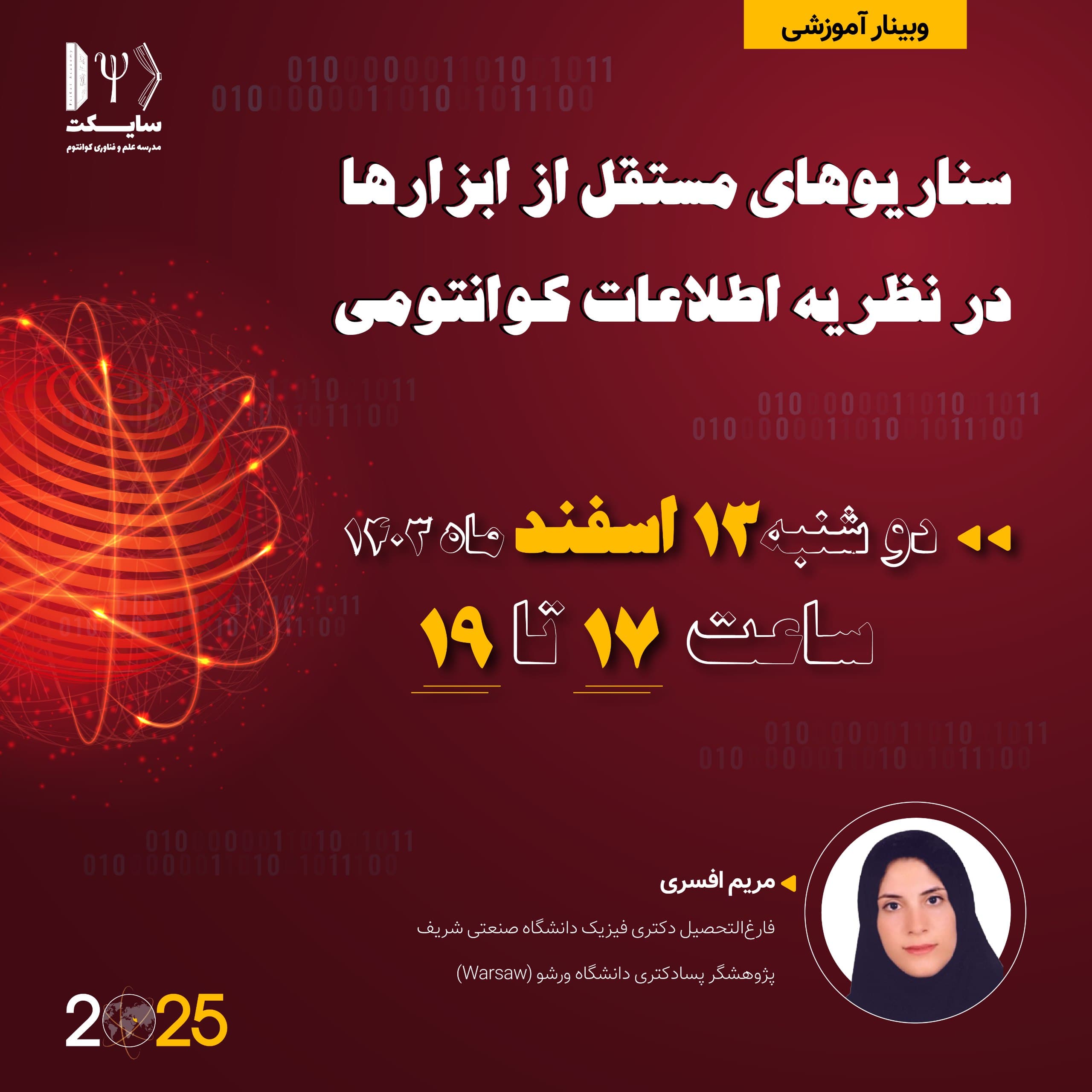
Held
Educational Webinar
Device-independent scenarios in quantum information
Device-independent scenarios represent a fundamental shift in quantum information theory that enables the implementation of secure and verifiable quantum protocols without relying on the internal details of devices. This approach is based on Bell nonlocality, whereby violation of Bell inequality is used to ensure properties such as entanglement, randomness, and cryptographic security. This concept has wide applications in quantum cryptography, quantum random number generation, self-testing, quantum computation, and quantum networks. In device-independent quantum cryptography, the security of exchanged keys is guaranteed solely based on the violation of the inequality, without the need to know the internal workings of the sender and receiver. In the field of random numbers, this method allows for the generation of verifiable quantum random numbers that remain unpredictable even in the presence of a spy controlling the devices. Another key aspect of device-independent scenarios is self-testing, which allows us to verify quantum states and measurements based solely on observed data. This feature facilitates the verification of entanglement sources in quantum networks and plays an important role in the development of quantum-secure hardware. Despite the theoretical and practical importance of device-independent scenarios, the experimental implementation of these protocols faces challenges, including detection limitations, noise, and experimental holes that can weaken non-local correlations. However, recent advances have brought these applications closer to reality. In this presentation, a comprehensive picture of device-independent scenarios from theoretical foundations to advanced applications in quantum cryptography, random number generation, and quantum networks is presented.
Event date available in details
2
About Teacher
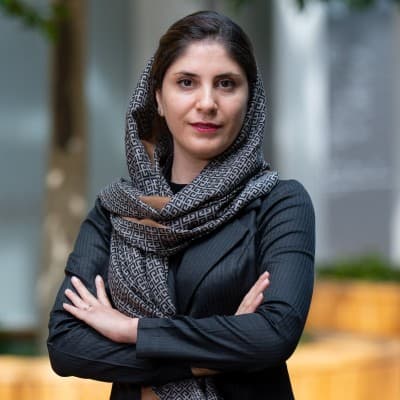
دکتر مریم افسری
- فارغالتحصیل دکتری دانشگاه صنعتی شریف
- پژوهشگر پساکوانتوم دانشگاه ورشو
3
Event information
مخاطبین وبینار:
دانشجویان، فارغ التحصیلان، اساتید علوم پایه و سایر علاقهمندان به کسب دانش در این حوزه
تاریخ برگزاری:
دوشنبه ۱۳ اسفندماه
ساعت برگزاری:
۱۷ الی ۱۹
4
Watch Webinar Recording
Video in preparation
The webinar recording will be available soon