Quantum Physics for Poets
Author: Leon M. Lederman - Christopher T. Hill
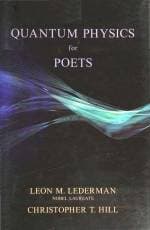
Quantum Physics for Poets, by Leon M. Lederman, Nobel laureate in physics, and Christopher T. Hill, a theoretical physicist, is an educational and popular science book designed to make complex quantum concepts accessible to general readers. Combining historical narratives, scientific explanations, everyday analogies, and occasional humor, the authors introduce readers to the evolution of physical ideas and the development of quantum theory The book traces the development of quantum physics from the discoveries of Max Planck and Albert Einstein to the contributions of Niels Bohr, Werner Heisenberg, and Erwin Schrödinger. It explores wave–particle duality, the counterintuitive behavior of particles, the roles of measurement and probability in quantum physics, and major developments in modern theoretical physics. The authors also discuss field theory, string theory, and the connections between quantum theory and modern technologies. This book is suitable for science enthusiasts, students from diverse academic backgrounds, and readers seeking a broad understanding of quantum physics without extensive mathematical calculations. Its educational value lies in connecting the history of science, fundamental concepts, and technological applications. However, it is not a substitute for a university-level quantum mechanics textbook and does not provide the specialized instruction needed to calculate quantum systems, design quantum algorithms, or implement quantum technologies.
Read the introduction- Pages
- 338
- Language
- انگلیسی
- Reading level
- Beginner
About the book
Quantum Physics for Poets, by Leon M. Lederman, Nobel laureate in physics, and Christopher T. Hill, a theoretical physicist, is an educational and popular science book designed to make complex quantum concepts accessible to general readers. Combining historical narratives, scientific explanations, everyday analogies, and occasional humor, the authors introduce readers to the evolution of physical ideas and the development of quantum theory
The book traces the development of quantum physics from the discoveries of Max Planck and Albert Einstein to the contributions of Niels Bohr, Werner Heisenberg, and Erwin Schrödinger. It explores wave–particle duality, the counterintuitive behavior of particles, the roles of measurement and probability in quantum physics, and major developments in modern theoretical physics. The authors also discuss field theory, string theory, and the connections between quantum theory and modern technologies.
This book is suitable for science enthusiasts, students from diverse academic backgrounds, and readers seeking a broad understanding of quantum physics without extensive mathematical calculations. Its educational value lies in connecting the history of science, fundamental concepts, and technological applications. However, it is not a substitute for a university-level quantum mechanics textbook and does not provide the specialized instruction needed to calculate quantum systems, design quantum algorithms, or implement quantum technologies.
How this book helps
General Introduction to Quantum Physics: Understanding fundamental concepts and the counterintuitive behavior of the atomic world.
History of Science: Exploring the scientists and historical developments that shaped quantum theory.
Interdisciplinary Science Education: Connecting physics with the history and philosophy of science.
Understanding Technological Applications: Gaining an introductory understanding of quantum physics in modern technologies.
Preparation for Specialized Study: Building a conceptual foundation for further study of modern physics and quantum mechanics.
What you will learn
تحول نظریه کوانتومی را شرح دهد: نقش دانشمندان برجسته را در شکلگیری فیزیک کوانتومی توضیح دهد.
مفاهیم بنیادی را بهصورت مقدماتی توضیح دهد: دوگانگی موج و ذره و رفتار احتمالاتی سامانههای کوانتومی را بشناسد.
تفاوت دیدگاه کلاسیک و کوانتومی را درک کند: محدودیتهای شهود کلاسیک در توصیف جهان اتمی را تشخیص دهد.
ارتباط علم و فناوری را شناسایی کند: نمونههایی از تأثیر فیزیک کوانتومی بر فناوریهای مدرن بیان کند.
موضوعات مطالعاتی بعدی را تشخیص دهد: برای ادامه مطالعه در حوزه فیزیک مدرن و فناوریهای کوانتومی مسیر مناسبی انتخاب کند.
Contributors
- Author
- Leon M. Lederman - Christopher T. Hill
Publication and reading details
- Publisher
- Prometheus Books
- Published
- 2011کتاب «فیزیک کوانتومی برای شاعران» نوشته لئون ام. لدرمن، برنده جایزه نوبل فیزیک، و کریستوفر تی. هیل، فیزیکدان نظری، اثری ترویجی و آموزشی است که با هدف قابلفهمکردن مفاهیم پیچیده فیزیک کوانتومی برای مخاطبان عمومی نوشته شده است. نویسندگان با ترکیب روایت تاریخی، توضیح علمی، تشبیههای روزمره و لحنی گاه طنزآمیز، خواننده را با تحول اندیشههای فیزیکی و چگونگی شکلگیری نظریه کوانتومی آشنا میکنند
- Language
- انگلیسی
- Pages
- 338
- Print run
- 1
- Format
- Text
- Reading level
- Beginner
- Category
- Quantum Mechanics
Book identifiers
- ISBN
- 9781616142339
From the book
Describe the Development of Quantum Theory: Explain the contributions of major scientists to quantum physics.
Explain Fundamental Concepts at an Introductory Level: Recognize wave–particle duality and the probabilistic behavior of quantum systems.
Understand Classical and Quantum Perspectives: Identify the limitations of classical intuition in describing the atomic world.
Recognize Connections Between Science and Technology: Identify examples of quantum physics in modern technologies.
Identify Further Learning Opportunities: Select suitable topics for continued study in modern physics and quantum technologies.
Turn the pages and read the complete book in the reader.
Read the full book