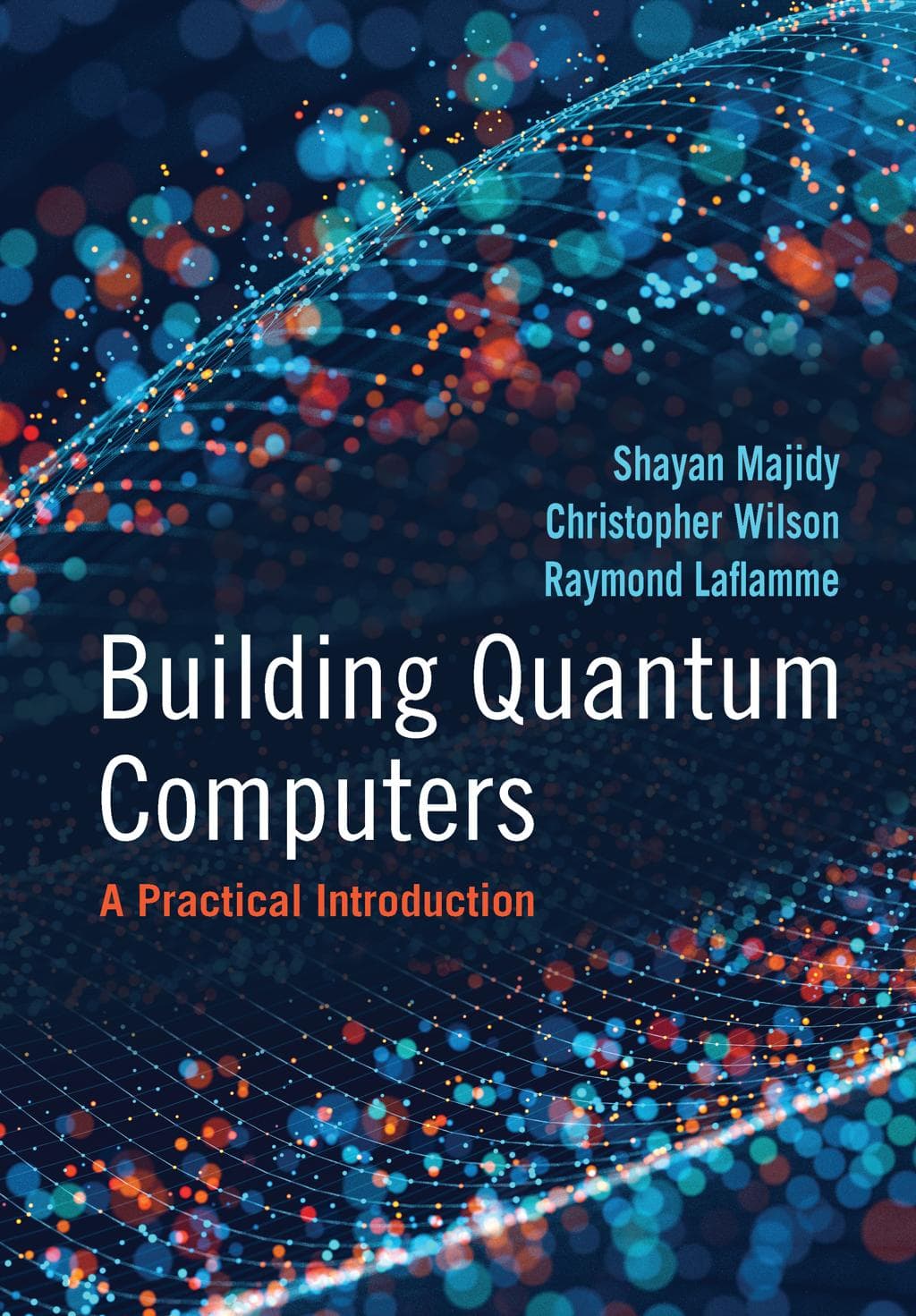
Building Quantum Computers: A Practical Introduction
Author: Shayan Majidy, Christopher Wilson, Raymond Laflamme
Building Quantum Computers: A Practical Introduction provides a practical and physics-oriented introduction to the hardware technologies used to implement quantum computers. Rather than focusing primarily on quantum algorithms and abstract circuit models, the book examines how physical quantum systems can be engineered to realize, control, and measure qubits. It begins with an introduction to quantum computing and a review of the relevant principles of quantum mechanics, establishing the foundation for understanding different hardware implementations. The book explores four major approaches to quantum computing hardware: nuclear magnetic resonance, quantum optics, trapped ions, and superconducting circuits. For each platform, it discusses the physical realization of qubits, state initialization, single- and two-qubit gates, control techniques, measurement, and sources of noise. By examining these technologies through a shared conceptual framework, the authors provide a comparative understanding of their operating principles, advantages, and limitations. The final chapter addresses quantum computer benchmarking, introducing methods for evaluating the performance of quantum hardware at different stages of development. With more than 80 exercises, applied problems, and further-reading suggestions, the book offers a valuable educational resource for senior undergraduate and graduate students in physics, engineering, and computer science, as well as researchers interested in quantum hardware and experimental quantum information science.
Read the introduction- Pages
- 272
- Language
- انگلیسی
- Reading level
- Advanced
About the book
Building Quantum Computers: A Practical Introduction provides a practical and physics-oriented introduction to the hardware technologies used to implement quantum computers. Rather than focusing primarily on quantum algorithms and abstract circuit models, the book examines how physical quantum systems can be engineered to realize, control, and measure qubits. It begins with an introduction to quantum computing and a review of the relevant principles of quantum mechanics, establishing the foundation for understanding different hardware implementations.
The book explores four major approaches to quantum computing hardware: nuclear magnetic resonance, quantum optics, trapped ions, and superconducting circuits. For each platform, it discusses the physical realization of qubits, state initialization, single- and two-qubit gates, control techniques, measurement, and sources of noise. By examining these technologies through a shared conceptual framework, the authors provide a comparative understanding of their operating principles, advantages, and limitations.
The final chapter addresses quantum computer benchmarking, introducing methods for evaluating the performance of quantum hardware at different stages of development. With more than 80 exercises, applied problems, and further-reading suggestions, the book offers a valuable educational resource for senior undergraduate and graduate students in physics, engineering, and computer science, as well as researchers interested in quantum hardware and experimental quantum information science.
How this book helps
Quantum Hardware Design and Development: Understanding the physical and engineering principles underlying quantum processor construction.
Qubit Technologies: Studying qubit implementations based on atomic, photonic, trapped-ion, and superconducting systems.
Quantum Control and Measurement: Understanding state initialization, quantum gate operations, and readout techniques.
Quantum Systems Engineering: Analyzing noise sources, errors, and operational limitations across hardware platforms.
Quantum Benchmarking: Learning methods for evaluating the quality and performance of quantum processors.
Experimental Education and Research: Using the book as a foundation for university courses and introductory experimental research in quantum hardware.
What you will learn
Explain the main components of a quantum computer and the criteria required for practical quantum computation.
Apply essential quantum mechanics concepts, including quantum states, operators, dynamics, and measurement, to hardware analysis.
Describe and compare four major quantum computing platforms: nuclear magnetic resonance, quantum optics, trapped ions, and superconducting circuits.
Analyze qubit initialization, single- and two-qubit gate operations, and measurement techniques across different hardware platforms.
Identify major noise sources and physical limitations affecting quantum hardware.
Evaluate the strengths and limitations of different quantum computing technologies.
Understand benchmarking methods and performance evaluation criteria for quantum processors.
Contributors
- Author
- Shayan Majidy, Christopher Wilson, Raymond Laflamme
Publication and reading details
- Publisher
- Cambridge University Press
- Published
- 2024
- Language
- انگلیسی
- Pages
- 272
- Print run
- 1
- Format
- Text
- Reading level
- Advanced
- Category
- quantum hardware
Book identifiers
- ISBN
- 978-1-009-41701-3