Quantum Computer Science: An Introduction
Author: N. David Mermin
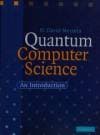
Quantum Computer Science: An Introduction by N. David Mermin presents the foundations of quantum computation from a computer science perspective. The book is designed primarily for readers without prior knowledge of quantum physics, making it particularly accessible to computer science students. It begins by introducing classical bits and quantum bits, reversible operations, quantum gates, circuit diagrams, and the principles of quantum measurement. The book then explores the general structure of quantum computation through several fundamental examples of quantum algorithms, including Deutsch's, Bernstein–Vazirani, and Simon's algorithms. It subsequently examines Shor's factoring algorithm and its implications for RSA cryptography, followed by Grover's quantum search algorithm. These examples illustrate how quantum computation can offer computational advantages over classical approaches for particular problems. Further chapters address quantum error correction, including five-qubit and seven-qubit error-correcting codes, as well as quantum information protocols involving a small number of qubits. Topics include Bell states, quantum cryptography, bit commitment, quantum dense coding, quantum teleportation, and the GHZ paradox. Overall, the book provides a concise yet substantial introduction to the theoretical foundations and major applications of quantum computer science
Read the introduction- Pages
- 220
- Language
- انگلیسی
- Reading level
- Beginner
About the book
Quantum Computer Science: An Introduction by N. David Mermin presents the foundations of quantum computation from a computer science perspective. The book is designed primarily for readers without prior knowledge of quantum physics, making it particularly accessible to computer science students. It begins by introducing classical bits and quantum bits, reversible operations, quantum gates, circuit diagrams, and the principles of quantum measurement.
The book then explores the general structure of quantum computation through several fundamental examples of quantum algorithms, including Deutsch's, Bernstein–Vazirani, and Simon's algorithms. It subsequently examines Shor's factoring algorithm and its implications for RSA cryptography, followed by Grover's quantum search algorithm. These examples illustrate how quantum computation can offer computational advantages over classical approaches for particular problems.
Further chapters address quantum error correction, including five-qubit and seven-qubit error-correcting codes, as well as quantum information protocols involving a small number of qubits. Topics include Bell states, quantum cryptography, bit commitment, quantum dense coding, quantum teleportation, and the GHZ paradox. Overall, the book provides a concise yet substantial introduction to the theoretical foundations and major applications of quantum computer science
How this book helps
- Quantum Computing Education
- Quantum Circuit Design
- Quantum Algorithm Development and Analysis
- Cryptography and Information Security
- Quantum Error Correction
- Quantum Communication and Information Transfer
- Quantum Computer Science Research
What you will learn
- Explain the differences between classical bits and quantum bits.
- Understand quantum states and the principles of measurement.
- Analyze quantum gates and quantum circuits.
- Describe the structure of fundamental quantum algorithms.
- Understand Shor's algorithm and its applications to integer factorization and RSA cryptography.
- Explain Grover's algorithm and its role in quantum search.
- Understand the foundations of quantum error correction and five- and seven-qubit codes.
- Analyze quantum information protocols such as teleportation and dense coding.
- Understand the relationship between quantum computation, algorithms, and information security.
Contributors
- Author
- N. David Mermin
Publication and reading details
- Publisher
- Cambridge University Press
- Published
- 2007
- Language
- انگلیسی
- Pages
- 220
- Print run
- 1
- Format
- Text
- Reading level
- Beginner
- Category
- quantum computing
Book identifiers
- ISBN
- 978-0-521-87658-2